

Learn how to consolidate debt step by step in Australia. Reduce repayments, simplify bills, and avoid common mistakes with this practical guide from OptiCheck.
How to consolidate debt step by step for Australians
TL;DR:
- Debt consolidation combines multiple unsecured debts into one manageable loan with a single interest rate.
- Proper preparation and understanding of options are crucial before applying for a consolidation loan.
- It requires disciplined financial habits to ensure it benefits your overall financial health.
Juggling three credit card bills, a personal loan repayment, and a payday loan reminder all landing in the same week is exhausting. For many Australian households, multiple debts aren't just a financial burden, they're a source of genuine anxiety that affects sleep, relationships, and daily decisions. The good news is that debt consolidation offers a practical path forward, rolling those scattered obligations into one manageable repayment with a single interest rate. This guide walks you through exactly how to do it, step by step, so you can move from overwhelmed to in control.
Table of Contents
- Understanding debt consolidation
- Preparing to consolidate: What you need
- Step-by-step process for consolidating your debt
- Common mistakes and troubleshooting tips
- Our perspective: Is debt consolidation always the answer?
- Take the next step with OptiCheck
- Frequently asked questions
Key Takeaways
| Point | Details |
|---|---|
| Consolidation explained | Consolidating debts means rolling multiple payments into one simpler loan for easier budgeting. |
| Preparation is key | List all unsecured debts and gather your financial details before starting the process. |
| Follow clear steps | Stick to a step-by-step process to compare options and apply successfully. |
| Avoid common traps | Watch out for fees, don’t ignore your spending habits, and read every loan’s fine print. |
| Seek help when needed | Professional advice or the right tools can make debt consolidation more effective and less stressful. |
Understanding debt consolidation
Before you act, you need to know what you're working with. Debt consolidation means combining several unsecured debts into one manageable loan, replacing multiple repayments with a single, predictable monthly amount. It's not a magic fix, but when used correctly, it's one of the most effective tools available to Australian borrowers.
There are three main types of consolidation available in Australia:
- Personal loan consolidation: You take out a new personal loan to pay off existing debts. This is the most common approach and works well for credit cards and payday loans. Understanding what a personal loan is before you apply helps you choose the right product.
- Balance transfer credit card: You move existing credit card balances to a new card with a low or zero introductory interest rate. This works best if you can pay off the balance before the promotional period ends.
- Home equity loan: If you own property, you can borrow against your equity to pay off unsecured debts. This carries risk because your home becomes collateral.
Who should consider consolidation? It suits people carrying two or more unsecured debts with high interest rates, particularly those who feel disorganised managing multiple due dates. Consolidating debt can reduce your overall interest costs and make budgeting significantly easier.
The benefits are real:
- Fewer repayments to track each month
- Potentially lower interest rate than credit cards
- Fixed repayment schedule for clearer budgeting
- Reduced mental load from simplified finances
But there are genuine downsides too. Extending your loan term means you could pay more interest overall, even at a lower rate. Some lenders charge establishment fees or early exit fees. And if you don't change the spending habits that created the debt, you may end up with both a consolidation loan and new debts.
Worth remembering: Debt consolidation reorganises your debt. It doesn't erase it. The discipline you bring to the process determines whether it actually helps.
Preparing to consolidate: What you need
Now that you grasp the basics, it's time to get your ducks in a row before starting consolidation. Rushing into an application without preparation is one of the most common mistakes borrowers make.
Collecting all relevant financial documents is the first step before applying for consolidation. Here's what you'll need to gather:
- Recent payslips (last two to three months)
- Bank statements (last 90 days)
- Current loan statements showing balances and interest rates
- Credit card statements
- Government-issued photo ID
- Proof of address (utility bill or lease agreement)
Before you gather documents, map out every debt you currently hold. Only unsecured debts, such as credit cards, personal loans, and payday loans, are suitable for this type of consolidation. Secured debts like your mortgage stay separate.
| Debt type | Balance | Interest rate | Monthly repayment |
|---|---|---|---|
| Credit card 1 | $4,200 | 19.99% | $126 |
| Personal loan | $8,500 | 14.5% | $210 |
| Payday loan | $1,100 | 48% | $275 |
| Total | $13,800 | Mixed | $611 |
This kind of table gives you a clear snapshot of what you owe and helps you calculate whether a consolidation loan at, say, 10% would genuinely save you money. Use it as your baseline.
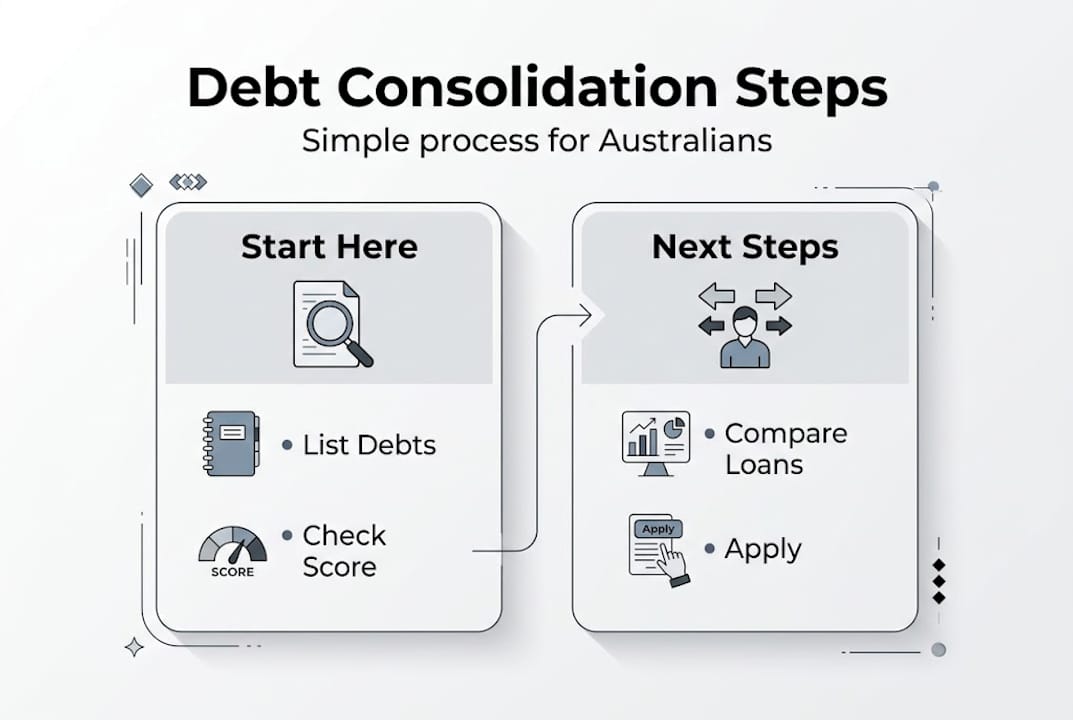
Your credit score matters here. Lenders use it to decide whether to approve you and at what rate. Check your score through a free service before you apply, and dispute any errors you find. Even small inaccuracies can drag your score down unfairly. For more on building your credit score before applying, it's worth spending a few weeks improving it if your score is borderline. Also, reviewing loan tips for Australians before you apply can save you from costly missteps.
Pro Tip: Create a simple debt checklist with every account name, balance, interest rate, and minimum payment. Tick each one off as you confirm the details. Missing even one debt from your consolidation can leave you still juggling multiple repayments.
Step-by-step process for consolidating your debt
With your essentials ready, let's walk through each step of debt consolidation to make it stress-free.
-
List all debts and repayments. Write down every unsecured debt you hold, including the lender, balance, interest rate, and monthly repayment. This becomes your master reference throughout the process.
-
Compare consolidation options. Comparing consolidation products is key to finding the best fit for your needs. Use the table below as a quick guide:
| Option | Best for | Typical rate | Key risk |
|---|---|---|---|
| Personal loan | Multiple debt types | 7% to 15% | Fees and term length |
| Balance transfer card | Credit card debt only | 0% intro, then 20%+ | Rate spike after promo |
| Home equity loan | Large debt amounts | 5% to 8% | Home at risk |
-
Check eligibility and prepare documents. Most lenders require a stable income, a reasonable credit score, and Australian residency. Review the document checklist from the previous section and confirm you meet the lender's criteria before applying.
-
Apply for your chosen consolidation method. Submit your application with all required documents. Many lenders now offer online applications with same-day decisions. Read through applying for personal loans to understand what to expect at each stage.
-
Pay off your other debts immediately. Once your consolidation loan is approved and funds are released, pay off every debt on your list right away. Don't let the money sit in your account. Close the accounts where possible to remove the temptation to re-use them.
-
Set up automatic payments on your new loan. Automate your repayment so you never miss a due date. A missed payment on your consolidation loan can damage your credit score and trigger penalty fees.
Pro Tip: Prioritise lenders who allow extra repayments without penalty. Paying even an extra $50 per month on a $13,000 loan at 10% can shave months off your term and save hundreds in interest.
Common mistakes and troubleshooting tips
Even with a solid plan, pitfalls happen. Here's how to avoid them and recover quickly.
The most common mistakes Australians make when consolidating debt include:
- Ignoring fees: Establishment fees, monthly service fees, and early repayment penalties can erode your savings. Always calculate the total cost of the loan, not just the interest rate.
- Mixing secured and unsecured debt: Consolidating your mortgage with your credit card debt is a different product entirely and carries far greater risk.
- Not changing spending habits: Failing to address the behaviours that led to debt often results in recurring problems. The consolidation loan becomes one more debt on top of newly accumulated balances.
- Falling for predatory offers: If a lender promises guaranteed approval or charges large upfront fees before you receive any funds, walk away. These are warning signs of a scam.
Red flag: Legitimate lenders in Australia do not charge fees before your loan is approved. If someone asks for payment upfront, report it to ASIC.
If you've already consolidated but feel like you're slipping back into old patterns, the fix is straightforward. Build a realistic monthly budget that accounts for your consolidated repayment first, then assigns every remaining dollar a purpose. Free personal financial planning tips can help you structure this if you're unsure where to start.

For Australians who feel genuinely overwhelmed, free financial counselling is available through the National Debt Helpline on 1800 007 007. A counsellor can help you assess whether consolidation is the right move or whether another strategy suits your situation better. There's no shame in asking for help. It's actually one of the smartest financial moves you can make.
Our perspective: Is debt consolidation always the answer?
Here's the uncomfortable truth that most finance articles skip over: debt consolidation is a tool, not a solution. We've seen Australians consolidate successfully and transform their finances. We've also seen people consolidate, feel relieved, and then spend freely again because the pressure was gone, only to end up worse off two years later.
The reset that consolidation offers is genuinely valuable, but only if you use it. The lower repayment isn't extra spending money. It's breathing room to build better habits. For disciplined borrowers who treat consolidation as the start of a new financial chapter, it works brilliantly. Reviewing essential loan tips alongside your consolidation plan reinforces the mindset shift needed.
Sometimes the honest answer is that you don't need another loan. You need a better budget. If your total debt is small and your income is stable, aggressive repayment of your existing debts might cost you less than consolidation fees and a new loan term. Always run the numbers both ways before you commit.
Take the next step with OptiCheck
If you've worked through this guide and you're ready to act, OptiCheck makes the next step straightforward. We help everyday Australians compare debt consolidation loans from a range of lenders, so you can see your options clearly before you apply. No guesswork, no pressure.
Whether you're looking at unsecured personal loans to roll your debts into one or you want to understand which product suits your situation, our team is here to help you compare smarter. Competitive rates, personalised support, and a process designed to make consolidation as simple as it should be. Start your comparison today and take back control of your finances.
Frequently asked questions
What debts can I consolidate in Australia?
Australians can typically combine different unsecured debts such as credit cards, personal loans, and payday loans into one consolidation loan.
Does consolidating debt hurt my credit score?
Applying for consolidation can slightly impact your credit score initially, but consistent on-time repayments on your new loan can help it recover and improve over time.
Are there fees involved with debt consolidation?
Yes. Most consolidation loans include fees you need to check carefully, such as application fees, monthly service charges, or early repayment penalties, so read all terms before signing.
Is debt consolidation right for everyone?
Debt consolidation suits some, but not all Australians facing debt. Those with multiple debts and a steady income benefit most, while others may need budgeting support or different financial strategies.
Can I consolidate secured debts like my mortgage?
Generally no. Consolidation usually covers unsecured debts and doesn't include secured loans like a mortgage, which are handled through separate refinancing products.
Recommended
Get finance insights in your inbox
Subscribe to receive the latest borrowing guides, broker tips, and comparison strategies from OptiCheck.
No spam. Unsubscribe anytime.